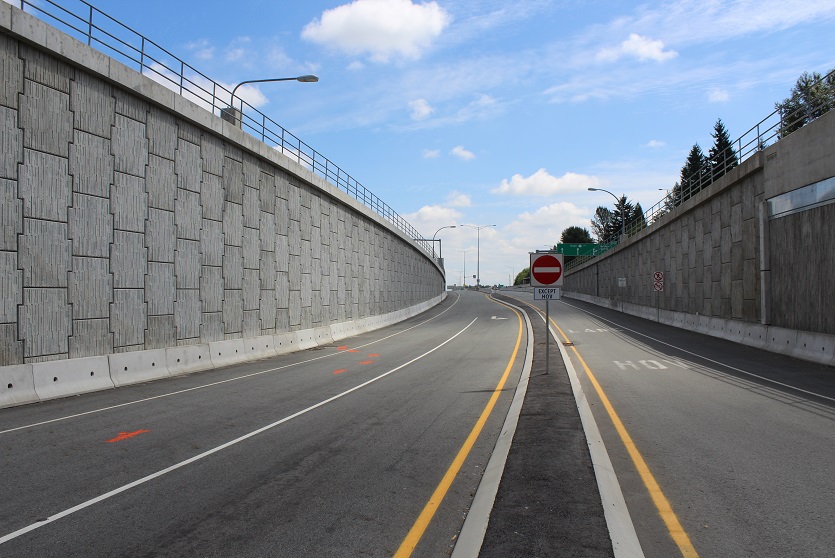
When a level difference is too high for a natural embankment, but a vertical wall is not needed, a reinforced soil slope offers the middle ground. Reinforcing the fill makes it possible to build slopes far steeper than unreinforced soil allows, typically between 45° and 80°, while keeping a natural or vegetated appearance.
Reinforced soil slopes save land compared with conventional embankments, reduce fill volumes and use little or no concrete. They fit naturally into the landscape and adapt to a wide range of projects, from transport corridors to industrial platforms and landfills.
Why steep embankments need reinforcement
- Land take of conventional embankments
Gentle natural slopes require a wide footprint that is often unavailable or expensive.
- Stability of steep fills
Beyond the natural angle of the soil, an unreinforced fill would slide or slump.
- Fill quality and volume
Imported granular fill is costly, and site-won soils are not always suitable without reinforcement.
- Surface erosion and vegetation
Steep faces are exposed to rain and runoff until vegetation is established.
- Large heights
High embankments raise questions of overall stability, settlement and constructability.
- Environmental integration
Many projects require a green, natural-looking face rather than a concrete wall.


Building steep slopes with reinforced fill
A reinforced soil slope is an engineered embankment in which layers of reinforcement are placed within the compacted fill. The reinforcement gives the soil mass the strength it lacks on its own, so the face can be built much steeper than a conventional embankment. Reinforced Earth slopes are built this way, with geosynthetic reinforcements such as ArmaGrid or metallic strips depending on the backfill and environment.
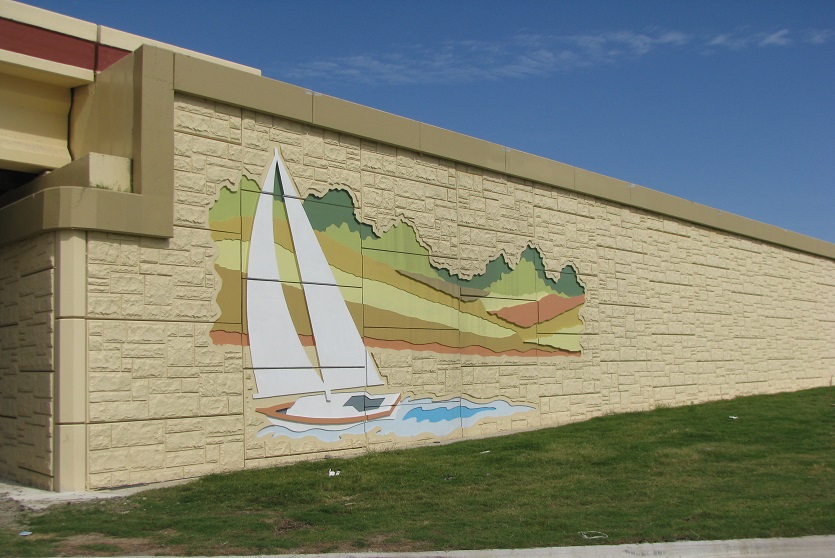
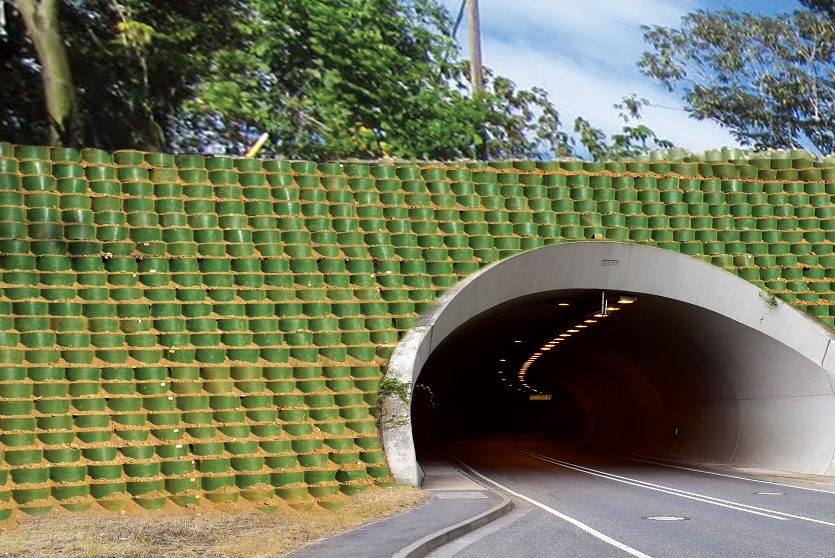
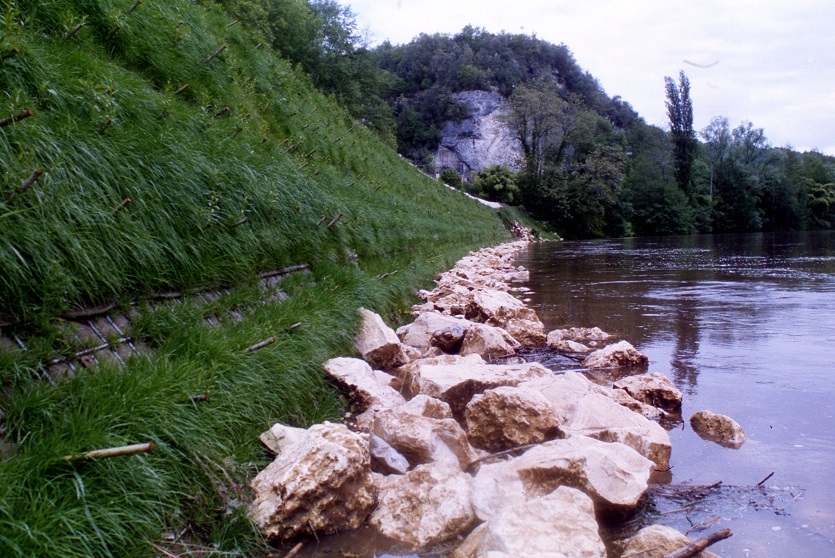
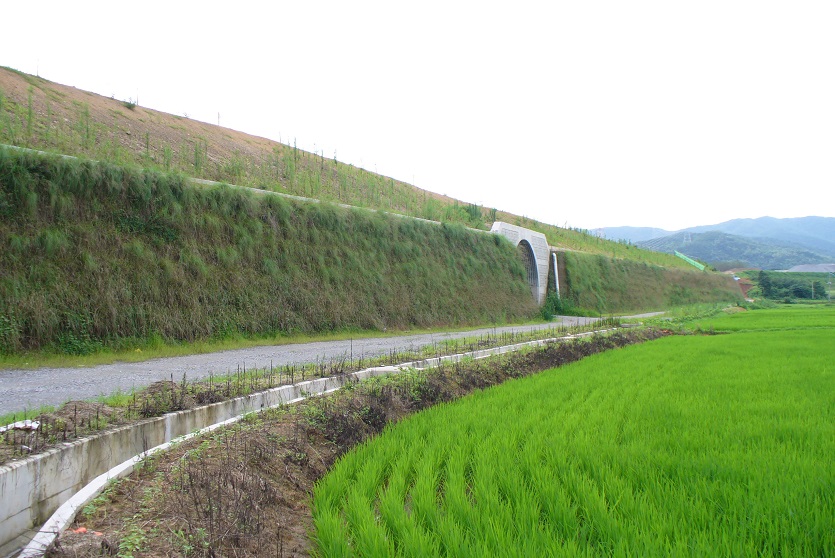
The face is designed to hold the surface soil in place and support its final appearance. It can be vegetated, mineral or confined with geocells such as ArmaWeb, and selected from the Architectural finish range. On exposed faces, erosion control mats such as TerraGreen help vegetation take hold.
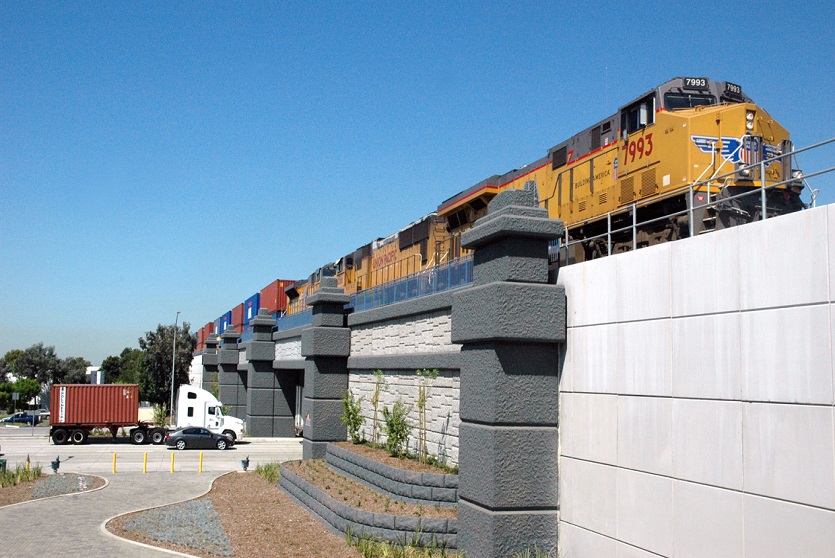
Reinforced soil slopes are built to support and widen roads, railways and airport platforms, to create industrial and logistics platforms, and to raise landfill capacity. They are also used as protective bunds and as dikes and levees. Depending on the height and site layout, they are built as single-tier or multi-tier slopes.
Reinforced soil slope configurations
- Single-tier reinforced slopes
A single-tier slope rises in one continuous face from toe to crest. It is the most common configuration, used for road and railway embankments, widening projects, platforms and landscaped level differences.
Its design is mainly driven by the slope angle, the height and the loads at the crest. The angle sets the balance between footprint and the type of facing: gentler faces vegetate easily, while steeper faces need a more structural facing. Reinforced Earth slopes with a vegetated or mineral finish from the Architectural finish range suit most single-tier projects.
-
Multi-tier reinforced slopes
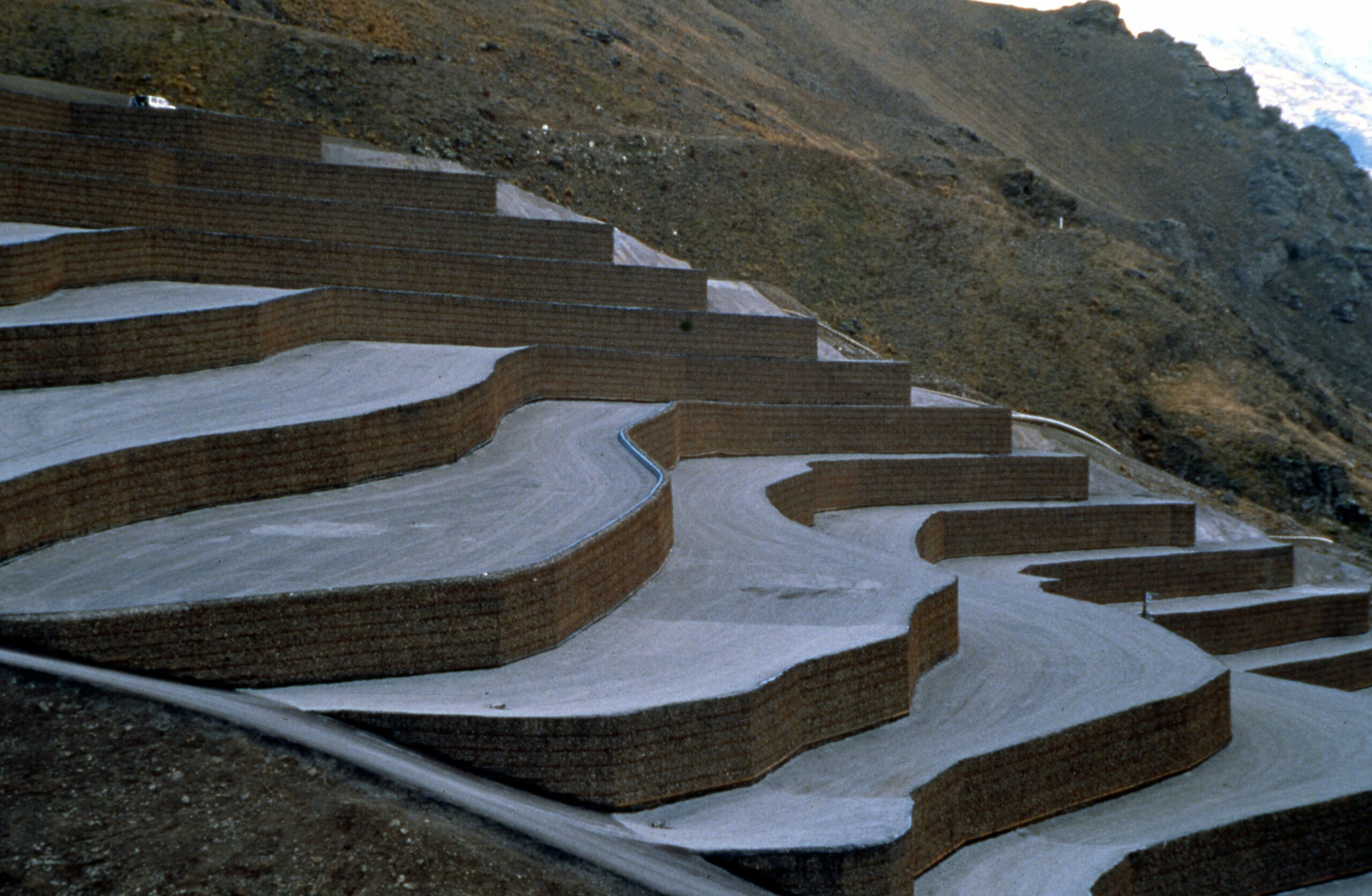
A multi-tier slope is made of several reinforced slopes stacked one above the other, separated by intermediate berms. It is used for very high embankments, landfill expansions and platforms where a single face would be too high to build or maintain.
Each tier carries part of the total height, and the berms provide access for maintenance, drainage and planting. Overall stability of the stacked structure, settlement of the lower tiers and water management on each berm are the key design points. These slopes are usually built with Reinforced Earth slopes and geogrids such as ArmaGrid, with vegetated faces to integrate the large surface into the landscape.


Defining slope angle, height and facing
- Slope angle and footprint: The steeper the face, the less land is used, but the more demanding the facing and reinforcement become.
- Height: Total height determines whether a single face is sufficient or if the slope should be split into tiers.
- Backfill type: Site-won soils, recycled or treated materials influence the choice of reinforcement and its durability.
- Chemical environment: pH, chlorides or sulphates in the fill guide the selection of geosynthetic or metallic reinforcements, detailed in Soil reinforcements.
- Loads at the crest: Traffic, platforms or structures above the slope define the required capacity.
- Foundation conditions: Soft ground under the slope may require basal reinforcement.
- Drainage: Groundwater and surface runoff must be controlled within the fill and on the face.
- Facing and vegetation: Climate, exposure and the desired appearance guide the choice between vegetated, mineral or confined faces.